ONEW 'KAKERA': A Japanese Pronunciation and Meaning Guide
ONEW's KAKERA -Unmei no Piece- turns the image of a fragment into a song about connection. Learn the title, phrasing, pronunciation, and a practical way to sing along.
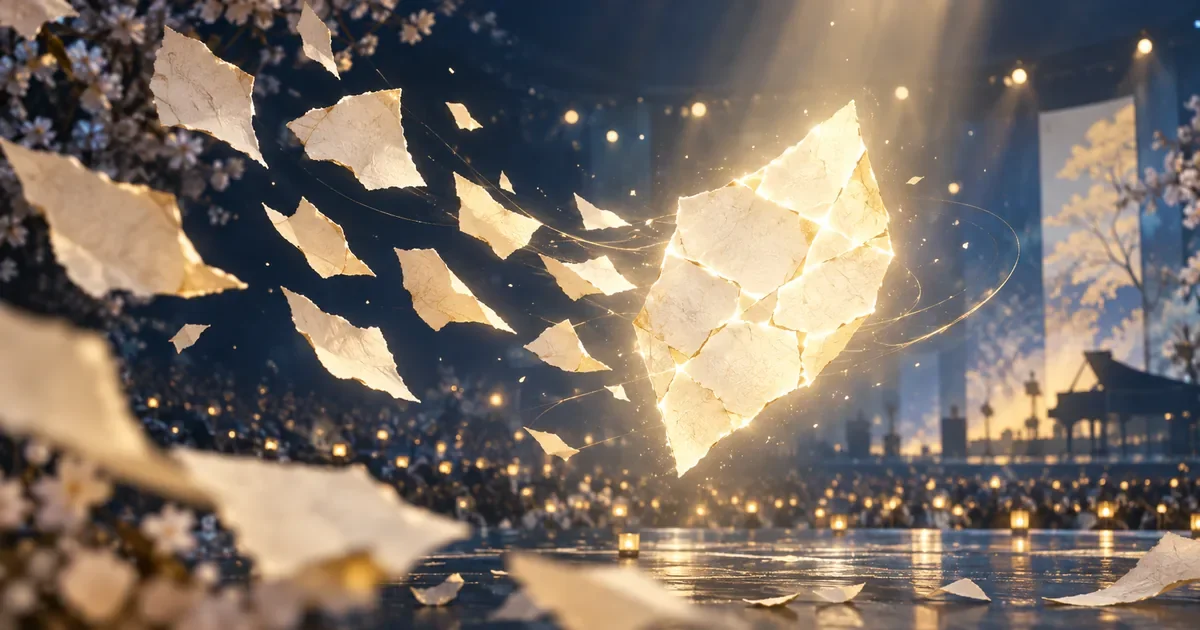
ONEW's "KAKERA -Unmei no Piece-" is easiest to understand through its title: *kakera* is a fragment, while *unmei no piece* frames that fragment as a piece of fate. The song's warmth comes from connection rather than completion. For learners, its measured vocal phrasing makes it a useful Japanese listening exercise if you follow the sound before the romaji.
What ONEW released
ONEW released his fourth Japanese single, *KAKERA -Unmei no Piece-*, on September 16, 2026. The official music video accompanied the release. It was his first Japanese single in about a year and arrived shortly before his Tokyo concerts on September 22 and 23, as reported by Korea JoongAng Daily.
The single includes the title track and reinterpretations connected with Japanese artists Aoi Teshima and Kirinji. That context fits ONEW’s solo style. Rather than forcing a Japanese release into the shape of a Korean title track, the project leans into melody, tone, and the quieter emotional pacing of Japanese pop.
This guide does not reproduce the copyrighted lyrics. It gives you the vocabulary and listening method needed to follow an authorized lyric source and hear what ONEW is doing with the words.
If romaji is new to you, begin with what romanization means and the Japanese lyrics romaji guide.
The title tells you how to hear the song
The Japanese word *kakera* means a fragment, chip, or broken-off piece. It can describe something physical, but song lyrics often use it for memory, feeling, identity, or a trace of someone.
*Unmei* means fate or destiny. *No* links the nouns, much like “of” in English. *Piece* is the English loanword ピース, pronounced in Japanese as a long *piisu*.
Put together, the subtitle can be read as “a piece of fate” or “fate’s piece.” The nuance matters more than choosing one fixed English rendering. A fragment sounds incomplete when it is alone. A piece sounds purposeful when it fits somewhere. The title holds both ideas at once.
That tension is the song’s emotional center. You do not need every translated line in front of you to hear ONEW moving between vulnerability and reassurance.
How to pronounce KAKERA
Say it in three clean units: *ka-ke-ra*.
English speakers often stretch the middle or turn the final *ra* into a heavy English R. Japanese rhythm works better when the three morae stay relatively even. The Japanese R sound is lighter, with a brief tongue tap that sits somewhere between an English R, L, and D.
Try this:
1. Say *ka* without dragging the vowel.
2. Give *ke* the same amount of space.
3. Tap the final *ra* lightly and release it.
Do not punch the first syllable as if the word were English. Listen to the sung version and copy its duration. Written stress marks are less useful here than a short audio loop.
The broader K-pop pronunciation guide explains why familiar Latin letters can tempt your mouth toward the wrong sound.
How to pronounce Unmei no Piece
Break the phrase into *un-mei no pii-su*.
The *mei* portion is not two unrelated syllables. Let the vowel move smoothly. In *piisu*, the doubled vowel matters. Hold *pii* longer than a clipped English “piece,” then finish with a light *su*. In singing, that final vowel may be clearer or softer depending on the melody.
The phrase should not sound like five English words squeezed into Japanese timing. Tap an even pulse and place each mora on it:
*u-n-me-i | no | pi-i-su*
That exercise may feel mechanical. Good. Do it slowly, then stop counting and return to ONEW’s recording. The counting builds the frame. His phrasing brings it back to life.
Why romaji can flatten ONEW’s phrasing
ONEW is unusually good at making a consonant feel gentle without losing clarity. Romaji cannot show all of that. It gives you letters, but not the exact breath, vowel color, or way a syllable leans into the next one.
The trap is reading each printed unit with equal emotional weight. The result may be technically recognizable and still sound stiff.
Listen for three things instead:
- Where he starts a phrase softly rather than attacking it.
- Which vowel carries the emotional peak.
- Where the line releases before the next breath.
Mark those moments above your romaji. A small arrow, underline, or breath slash is enough. Your page should become a memory aid for what you heard, not a substitute for listening.
For more on moving beyond letter-by-letter singing, see how to sing K-pop songs.
The song is about fitting, not fixing
A predictable reading would say two incomplete people meet and make each other whole. That may be comforting, but it flattens the title.
The more interesting idea is recognition. A fragment does not need to be repaired before it can belong. Its edges, history, and shape are exactly what allow it to meet another piece.
That reading suits ONEW's delivery. He does not sing the concept like a victory speech. The warmth feels earned through uncertainty. Connection arrives as something noticed, not conquered.
When you annotate an authorized translation, look for words related to fragments, paths, coincidence, meetings, and memory. Then ask whether each image suggests damage, possibility, or both. This gives you a stronger interpretation than replacing each Japanese word with the first English dictionary result.
What most learners get wrong
Most people begin with the full song. They open romaji, press play, and try to keep up. The first verse is manageable, the next transition slips away, and soon they are making approximate sounds while ONEW does all the musical work.
Use one phrase instead.
Listen without text. Hum its rhythm. Speak the vowels. Add consonants only after the timing feels comfortable. Then sing with the recording at a lower volume than your own voice.
That last step is humbling. It exposes every spot where you have been hiding behind the vocalist. It is also the fastest way to learn what your mouth is actually doing.
If you want easier material before returning to "KAKERA," browse these K-pop songs for beginners and easy K-pop songs to sing.
A six-pass KAKERA practice session
Choose one verse or chorus section from an authorized lyric display.
Pass one: listen with the screen hidden. Tap the pulse and notice the breath points.
Pass two: read the Japanese text, or checked romaji if you cannot read kana and kanji yet. Circle the vowels that sound longest.
Pass three: read the English meaning once. Put it away and describe the section in your own sentence.
Pass four: speak the line on rhythm. Do not sing yet.
Pass five: sing along at reduced speed, keeping the vowels clean and the consonants light.
Pass six: record yourself over a quiet backing track. Compare phrasing, not vocal tone. You are not trying to become ONEW. You are checking whether your words arrive where his do.
This method also works for Korean material in the SHINee "ATMOS" guide and the broader K-pop lyrics guide.
Japanese loanwords are not English shortcuts
The word ピース comes from English, but its Japanese pronunciation follows Japanese sound and rhythm. That makes it familiar enough to recognize and unfamiliar enough to mispronounce.
The same issue appears throughout Japanese pop. A learner sees an English-derived word and switches accents halfway through the line. Suddenly the word is louder, more compressed, and detached from the surrounding phrase.
Keep it inside the Japanese sentence. Match the singer’s vowel length. Let the pitch contour come from the melody rather than your everyday English pronunciation.
Our Chinese pinyin guide addresses a related lesson in another language: Latin letters are a map designed for a sound system, not permission to read everything as English.
Learn meaning in images, not isolated words
Build a small image list for the song. Start with fragment, fate, path, meeting, and piece. Add words only when you hear them clearly or verify them through an authorized lyric source.
Then connect each image to the emotional movement of the section. Does the fragment feel lonely, remembered, discovered, or finally placed? Does fate sound comforting or frightening? Is the “piece” a person, a memory, or the moment itself?
You do not need one official answer for every metaphor. A good meaning guide shows what the language supports and leaves room for the listener. ONEW’s restrained delivery rewards that patience.
For a structured way to combine vocabulary with repeated listening, use the guide to learning Japanese through songs. The method works beyond anime music.
Use Lyrical without losing the music
The worst lyric-learning setup makes you stare at a wall of text while the song passes in the background. Lyrical is built around the opposite idea: keep synchronized lyrics close to the music so you can catch the current line, repeat it, and return your attention to the performance.
For "KAKERA," use the live line as your anchor. Listen once for sound, once for meaning, and once with your own voice. Do not try to solve the whole song during the first play.
You can learn more about Lyrical, compare it with Apple Music’s romanization, or review the best romanized K-pop lyrics apps.
Frequently asked questions
What does KAKERA mean in English?
*Kakera* means a fragment, chip, or piece of something. In a song title, it can suggest a piece of memory, emotion, or identity. ONEW pairs it with *Unmei no Piece*, “a piece of fate,” which gives the fragment a sense of connection and purpose rather than treating it only as damage.
How do you pronounce ONEW's KAKERA title?
Say *ka-ke-ra* with three relatively even units. Keep the vowels clean and use a light tongue tap for the Japanese R. For *Unmei no Piece*, try *un-mei no pii-su*, holding the long vowel in *pii* instead of compressing it into the English word “piece.”
Is KAKERA a Korean or Japanese song?
It is a Japanese release by ONEW, the leader and member of the Korean group SHINee. It is his fourth Japanese single. Learners should use Japanese pronunciation and rhythm even though they may discover the track through K-pop playlists or SHINee fandom.
Where can I find the full KAKERA lyrics?
Use an authorized source such as the official music video captions, the artist’s official materials, or the synchronized lyric display provided by your licensed music service. This guide focuses on pronunciation, vocabulary, and interpretation rather than republishing copyrighted lyrics.
Should I learn the romaji before the meaning?
Start with sound, then check meaning early. Romaji without meaning can turn into empty mimicry, while translation without listening loses the phrasing. A useful order is listen, hum, read, understand, speak, and finally sing. Repeat that sequence with one short section at a time.
Why does my Japanese sound stiff when the letters look easy?
You may be importing English stress, shortening long vowels, or giving consonants too much weight. Japanese rhythm distributes time differently. Copy one short audio phrase, mark vowel length and breath points, and record yourself. The problem is usually timing rather than an inability to make the individual sounds.
One fragment at a time
"KAKERA" is not a song to conquer by racing through a romanized page. Learn one phrase until its vowels sit comfortably. Understand the image inside it. Then connect that fragment to the next one. The practice method mirrors the title, which feels exactly right for this song.