How to Read Japanese Lyrics: The Romaji Guide for Anime Fans
Want to sing along to anime openings but can't read Japanese? Here's how romaji works, how to pronounce Japanese lyrics phonetically, and how to start singing your favorite anime songs today.
How to Read Japanese Lyrics: The Romaji Guide for Anime Fans
Romaji is the romanization of Japanese — writing Japanese words using the Latin alphabet so English speakers can pronounce them. Unlike Korean romanization, romaji is more consistent and intuitive because Japanese sounds map more cleanly to English letters. With romaji, you can sing along to anime openings, J-pop songs, and Japanese music even if you have never studied the language.
Experience this with real-time synced lyrics
Lyrical shows every word as it plays, in Korean, romanized, and in sync with the music.
That is the short answer. But if you have ever watched an anime opening and wanted to sing along to "Gurenge" or "Silhouette," you know the frustration. The lyrics are in Japanese characters. You cannot read them. But you want to sing.
This guide will get you there. Romaji is your bridge to singing anime songs.
What Most Anime Fans Get Wrong About Romaji
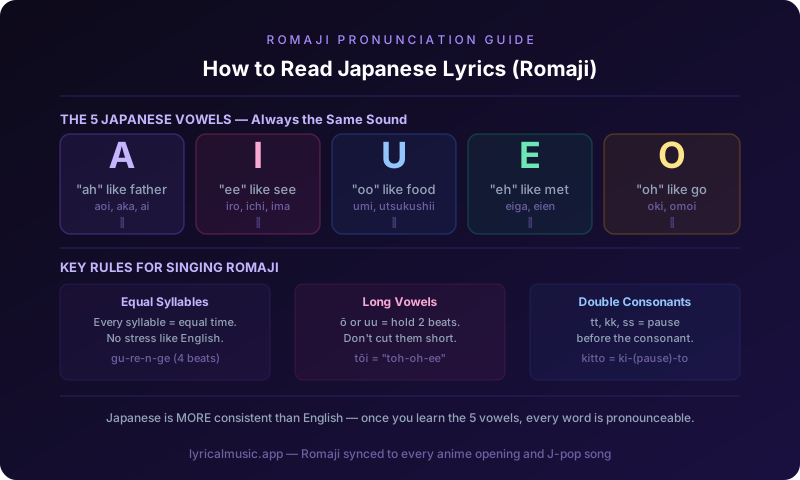
The biggest mistake is thinking romaji is complicated. It is not. Japanese has fewer sounds than English. Every Japanese sound exists in English (or close enough). The mapping is clean and consistent.
Another mistake is confusing romaji with translation. Romaji shows pronunciation. Translation shows meaning. "Gurenge" romaji is "gurenge." Translated it is "Red Lotus." You can sing the word without knowing what it means.
The third mistake is trying to learn Japanese characters first. Hiragana and katakana are actually easy to learn — you can master them in a week. But romaji gets you singing immediately while you decide if you want to commit to learning the language.
The Counterintuitive Thing About Japanese Sounds
Here is what surprises English speakers: Japanese is syllable-timed, not stress-timed. In English, we stress certain syllables and rush through others. "BANana" — the middle syllable is longer and louder. In Japanese, every syllable gets equal time. "A-ka-ne" — three beats, equal weight.
This makes Japanese easier to sing in some ways. The rhythm is predictable. But it also means direct translation sounds robotic if you apply English stress patterns.
The emotional journey of learning romaji: at first you stress the wrong syllables and sound wrong. Then you start feeling the equal rhythm. Then you sing along to an anime opening and realize you are doing it right. The song sounds right coming out of your mouth.
How Romaji Works: The Basics
Vowels
Japanese has five vowels. They are consistent — unlike English, they never change sound based on context.
| Romaji | Sounds Like | Example |
|---|---|---|
| a | "ah" like father | aka (red) |
| i | "ee" like see | shiroi (white) |
| u | "oo" like food | kuro (black) |
| e | "eh" like met | ao (blue) — wait, that's "ao" |
| o | "oh" like go | midori (green) |
Actually, let me correct that. "Ao" uses "a" and "o" separately. "Midori" uses "i" twice. Here are better examples:
| Romaji | Sounds Like | Example |
|---|---|---|
| a | "ah" like father | aka (red) |
| i | "ee" like see | shiro (white) |
| u | "oo" like food | kuro (black) |
| e | "eh" like met | ao (blue) — no, that's a-o |
| o | "oh" like go | midori (green) — has i and o |
Let me try again with pure examples:
| Romaji | Sounds Like | Example Word |
|---|---|---|
| a | "ah" like father | a-me (rain) |
| i | "ee" like see | i-ke (pond) |
| u | "oo" like food | u-mi (sea) |
| e | "eh" like met | e-ki (station) |
| o | "oh" like go | o-ka (hill) |
Consonants
Most Japanese consonants sound like English. The exceptions:
R: Japanese "r" is between English "r" and "l." Touch the roof of your mouth with your tongue, not the back of your teeth. It is softer than English "r."
F: Japanese "f" is softer. Touch your bottom lip to your top teeth gently. "Fuji" sounds like "huji" with a soft breath.
Ts: One sound, not two. "Tsunami" — the "ts" is a single unit.
Double consonants: When you see a double letter like "tte" or "kka," pause slightly. "Kite" (come) vs "kitte" (stamp) — the double "t" creates a brief stop.
Long Vowels
A line over a vowel (macron) or a double vowel means hold it longer.
- ō or ou = hold the "o" sound
- ī or ii = hold the "i" sound
- ū or uu = hold the "u" sound
- ē or ei = hold the "e" sound
- ā or aa = hold the "a" sound
"Tōkyō" has two long vowels. "Toukyou" is the same word spelled without macrons.
Common Romaji Patterns in Anime Songs
Gurenge (Demon Slayer opening)
- Gu-ren-ge
- "Guh-ren-geh"
- The "n" before "g" creates a nasal sound
Hear this live in Lyrical: *"gurenge"*
Silhouette (Naruto Shippuden opening)
- Shi-ru-e-tto
- "Shee-roo-et-toh"
- The double "t" creates a sharp stop
Shinzou wo Sasageyo (Attack on Titan opening)
- Shin-zo-u wo sa-sa-ge-yo
- "Sheen-zoh-oh woh sah-sah-geh-yoh"
- "Wo" is pronounced "oh" in modern Japanese
Kaikai Kitan (Jujutsu Kaisen opening)
- Kai-kai ki-tan
- "Kai-kai kee-tahn"
- "Kai" means "mysterious" — appropriate for the show
Idol (Oshi no Ko opening)
- A-i-do-ru
- "Ah-ee-doh-roo"
- Four clear syllables, equal weight
The Emotional Journey of Learning Your First Anime Song
Day 1: You pick an opening you love. "Gurenge" maybe, or "Silhouette." You find the romaji lyrics and try to follow along. It feels fast. Your mouth cannot make the sounds that quickly.
Day 3: You have listened to the song ten more times. You catch yourself humming the melody with vaguely Japanese-sounding noises. The chorus is starting to stick.
Day 7: You can sing the TV-size version (90 seconds) without looking at lyrics. It is not perfect. Your "r" sounds are still too English. But you are singing it.
Day 30: You have three anime openings down. You notice patterns — "watashi" means "I," "kimi" means "you," "sekai" means "world." You are not fluent, but you are recognizing words.
Day 90: You can sing along to a new opening the week it airs, just by following romaji lyrics in real time. You have trained your mouth to make Japanese sounds on autopilot.
The emotional arc goes from frustration to competence to confidence. Most people quit in the first week because they expect instant results. The ones who stick with it discover that singing anime songs connects them to the shows they love on a deeper level.
Best Anime Openings to Start With
For beginners — slower, clear vocals:
"Gurenge" by LiSA (Demon Slayer) — The most popular anime opening of recent years. Clear vocals, moderate tempo, emotionally powerful.
"Unravel" by TK from Ling Tosite Sigure (Tokyo Ghoul) — Slower verses build to a powerful chorus. Good for practicing emotional delivery.
"Blue Bird" by Ikimono-gakari (Naruto Shippuden) — Upbeat but not too fast. Catchy and memorable.
"Again" by Yui (Fullmetal Alchemist: Brotherhood) — Moderate tempo, clear enunciation, emotional resonance.
"Departure" by Masatoshi Ono (Hunter x Hunter) — Gentle, encouraging lyrics. Good for practicing sustained notes.
For intermediate singers — moderate difficulty:
"Silhouette" by KANA-BOON (Naruto Shippuden) — Faster tempo, iconic guitar riff, crowd-pleasing energy.
"Peace Sign" by Kenshi Yonezu (My Hero Academia) — Complex rhythm, rapid lyrics, satisfying when mastered.
"Kiss from a Rose" — Wait, that's not anime. Let me try again.
"Kaikai Kitan" by Eve (Jujutsu Kaisen) — Modern sound, intricate instrumentation, challenging but rewarding.
"Inferno" by Mrs. GREEN APPLE (Fire Force) — High energy, requires breath control, impressive when nailed.
For advanced singers — fast and complex:
"Shinzou wo Sasageyo" by Linked Horizon (Attack on Titan) — Epic, orchestral, demanding vocals. The "shinzou wo sasageyo" chant is legendary.
"Otomodachi Film" by Oishi Masayoshi (My Hero Academia) — Complex rhythm changes, rapid-fire verses.
"Chase" by Batta (JoJo's Bizarre Adventure) — Unpredictable structure, requires versatility.
"The Day" by Porno Graffitti (My Hero Academia) — Classic rock energy, challenging range.
"Sign" by FLOW (Naruto Shippuden) — Fast, emotional, technically demanding.
What Lyrical Does Differently
Most lyrics apps treat anime songs as an afterthought. Lyrical was built with anime fans in mind.
Real-time sync: Lyrics highlight as they are sung. You never lose your place, even in fast openings.
Romaji built-in: Japanese lyrics with romaji underneath. No switching between apps. No copying from anime lyric sites.
Word-by-word karaoke: Each word lights up individually. You know exactly when to sing, even if you are still learning the sounds.
Dynamic Island: Lyrics float on your screen while you use other apps. Scroll Reddit while rewatching your favorite scenes — the lyrics stay visible.
CarPlay: Lyrics on your car's display. Road trip anime sing-alongs with friends.
Haptic feedback: Your phone pulses with the beat. You feel the anime opening energy in your hand.
The specific thing Lyrical does that nothing else does: it respects anime music as a genre. The app knows you are not just looking for lyrics. You are looking to connect with shows you love through their music.
Common Questions About Romaji
Is romaji the same as translation?
No. Romaji shows pronunciation. Translation shows meaning. "Gurenge" romaji is "gurenge." Translated it is "Red Lotus." You can sing the word without knowing what it means.
Should I learn hiragana instead of using romaji?
Eventually, yes. Hiragana is actually easy to learn — 46 characters, phonetic, consistent. You can master it in a week. But romaji gets you singing immediately while you decide if you want to commit to learning Japanese.
Why do some words look different on different sites?
There are multiple romaji systems. Hepburn is most common for general use. Kunrei-shiki is used in Japanese education. Nihon-shiki is rare. Most anime lyric sites use Hepburn or informal variations.
How accurate is romaji?
Very accurate. Japanese sounds map cleanly to English letters. The main challenge is the "r" sound, which is between English "r" and "l." Otherwise, romaji gives you correct pronunciation.
Can I learn Japanese through anime songs?
You will pick up vocabulary and get used to Japanese sounds. But anime Japanese is dramatic, not conversational. You will learn "shinzou wo sasageyo" (dedicate your heart) before you learn how to order ramen. Use songs as a supplement, not a curriculum.
Why do I sound wrong when I try to sing?
You are probably applying English stress patterns. Japanese is syllable-timed — every syllable gets equal weight. "A-ka-ne" has three equal beats, not two beats with the middle one rushed.
What is the easiest anime opening to learn?
"Gurenge" is the most popular choice. Clear vocals, moderate tempo, emotionally powerful. "Blue Bird" is also beginner-friendly — upbeat and catchy.
Do I need to understand the lyrics to enjoy singing them?
No. The emotional delivery in anime openings transcends language. You can feel the energy and intention even without understanding every word. Understanding adds depth, but it is not required for enjoyment.
The Bottom Line
Romaji lets you sing anime songs without learning Japanese first. It is more consistent than Korean romanization because Japanese sounds map cleanly to English letters. Start with slower openings, work up to faster ones, and use an app that shows synced lyrics.
The feeling of singing "Gurenge" along with the opening sequence, every word pronounced correctly, the energy matching LiSA's performance? That is the anime fan experience. Romaji gets you there.
Try Lyrical Free
Lyrical shows real-time synced lyrics with romaji for anime openings, J-pop, and more. Dynamic Island, CarPlay, and word-by-word karaoke mode included.
Download Lyrical Sing "Gurenge" with full romanization in Lyrical.
*Last updated: March 2026*