K-Pop Songs for Beginners: Where to Start
New to K-Pop? Discover the easiest K-pop songs for beginners to learn, complete with romanized lyrics and pronunciation tips. Start your K-pop singing journey today.
The best K-pop songs for beginners have simple, repetitive choruses, slower tempos, and clear pronunciation. Start with Twice's "What is Love?" or BTS's "Dynamite" — both feature English-friendly lyrics and catchy, easy-to-follow melodies that build confidence quickly.
Experience this with real-time synced lyrics
Lyrical shows every word as it plays, in Korean, romanized, and in sync with the music.
Diving into K-pop as a new fan can feel overwhelming. With thousands of songs across hundreds of groups, where do you even begin? This guide cuts through the noise and gives you a curated starting point — songs that are genuinely beginner-friendly, not just popular. Each recommendation comes with specific reasons why it works for newcomers, plus practical tips for learning the lyrics and pronunciation.
What Makes a K-Pop Song Beginner-Friendly?
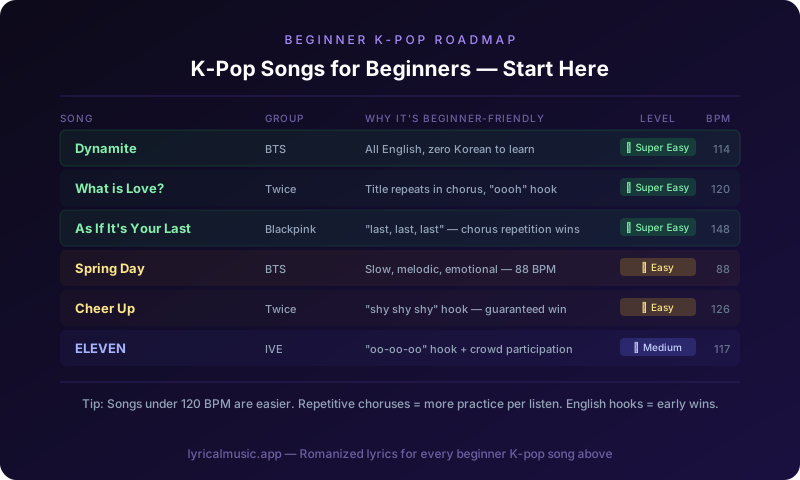
Not every catchy K-pop hit is suitable for beginners. Several factors determine whether a song will help you build confidence or leave you frustrated.
Simple, Repetitive Choruses
Songs with repetitive chorus structures give you multiple chances to nail the same phrases. When a chorus repeats three or four times with minimal variation, your brain gets the repetition it needs to internalize the sounds and meanings.
Slower Tempos
Fast rap verses and rapid-fire vocal runs look impressive but they're brutal for beginners. Songs in the 90-110 BPM range let you hear each syllable clearly and give you time to process what you're hearing.
Clear Pronunciation
Some idols have distinct vocal styles that make words harder to catch. Look for songs where the pronunciation is crisp and each syllable gets its moment. Ballads and mid-tempo tracks often excel here.
English-Friendly Elements
Songs that mix Korean with English phrases give you anchor points. When you recognize "love," "baby," or "forever" amidst Korean lyrics, you stay oriented and build confidence.
Predictable Song Structure
Verse-chorus-verse-chorus-bridge-chorus structures are easier to follow than experimental arrangements. Beginners benefit from knowing what comes next.
Top 10 K-Pop Songs for Absolute Beginners
These songs were selected based on tempo, repetition, pronunciation clarity, and overall accessibility. They're grouped by difficulty level within the beginner category.
Super Easy: Your First Three Songs
1. BTS — "Dynamite" (2020)
This all-English disco-pop track is the perfect entry point. No Korean to learn, just pure sing-along joy. The melody sits comfortably in most vocal ranges, and the chorus repeats enough that you'll know it by the second listen.
Hear this live in Lyrical: *"Dynamite"*
Why it works: Zero language barrier, iconic status, and genuinely fun to sing.
2. Twice — "What is Love?" (2018)
The chorus is essentially the title question repeated with infectious energy. The verses mix Korean with enough English to keep you grounded. The "oooh-oooh" hook gives you easy participation moments even before you learn the words.
Why it works: Repetitive chorus, clear enunciation, and universally loved.
3. Blackpink — "As If It's Your Last" (2017)
Fast but not frantic, this song's chorus is pure repetition magic. "As if it's your last, last, last, last" — by the fourth "last," you've got it. The pre-chorus builds gradually, giving you time to prepare for the drop.
Why it works: English-heavy chorus, memorable hook, and high energy without overwhelming speed.
Easy: Building Confidence
4. Red Velvet — "Red Flavor" (2017)
Summer anthem perfection. The chorus spells out "R-E-D" and repeats flavor names you already know. The verses are playful and paced generously. This song teaches you that K-pop fun doesn't require vocal gymnastics.
Why it works: Spelling hook, moderate tempo, and joyful energy.
5. EXO — "Love Shot" (2018)
Sleek and seductive without being vocally demanding. The "love shot" hook is instantly memorable, and the verses give you space to breathe. The English phrases "it's the love shot" anchor the entire song.
Why it works: Repetitive central hook, slower groove, and iconic choreography to match.
6. IU — "Blueming" (2019)
IU's clear, gentle pronunciation makes this ideal for beginners. The metaphor of blooming flowers is easy to grasp, and the melody flows naturally. The "blueming, blueming" chorus is pure ear candy.
Why it works: Crystal-clear vocals, moderate pace, and poetic but accessible lyrics.
Moderate: Stretching Your Skills
7. NewJeans — "Hype Boy" (2022)
The fragmented structure might seem challenging, but each section is short and repetitive. The "hype boy" hook appears throughout, giving you multiple entry points. The Gen Z energy makes it feel fresh and approachable.
Why it works: Short repetitive sections, modern sound, and the hook is everywhere.
8. Seventeen — "Very Nice" (2016)
The "very nice" exclamation is your anchor through the entire song. The verses build gradually, and the chorus explodes with group energy. The call-and-response sections let you participate even before you know every word.
Why it works: Call-and-response structure, repetitive hook, and group dynamics that carry you along.
9. (G)I-DLE — "Tomboy" (2022)
Bold attitude with a surprisingly singable structure. The "yeah, I'm a tomboy" declaration is instantly memorable, and the verses give you space to catch your breath. The English-heavy chorus helps you stay oriented.
Why it works: Strong hook, clear attitude, and memorable English phrases.
10. Stray Kids — "God's Menu" (2020)
Save this for when you're ready for a challenge. The verses are rapid-fire, but the "du du du du" hook and "cookin' like a chef" sections are pure beginner-friendly gold. The energy is infectious even when you can't keep up with every word.
Why it works: Iconic hooks you can nail even if the verses escape you.
How to Learn These Songs Step by Step
Finding the right songs is only half the battle. Here's a proven method for actually learning them.
Step 1: Listen Without Pressure
Play the song five to ten times while doing other activities. Let your brain absorb the melody and rhythm without trying to memorize anything. This passive listening builds familiarity.
Step 2: Focus on the Chorus Only
Ignore the verses initially. The chorus repeats multiple times and carries the song's emotional core. Learn it first, and you'll have something to sing along with immediately.
Step 3: Use Romanized Lyrics
Romanization converts Korean characters into Latin letters you can read. Look for reliable romanization sources that use the Revised Romanization system. Avoid casual fan transcriptions that might be inconsistent.
Step 4: Break It Down by Syllable
Korean syllables are more uniform than English. Each gets roughly equal emphasis and time. Practice speaking the romanized lyrics slowly, syllable by syllable, before trying to sing them.
Step 5: Sing Along with the Music Video
Music videos provide visual context and often include lyrics on screen. The choreography cues can help you anticipate vocal sections. Plus, seeing the idols perform gives you energy to push through difficult parts.
Step 6: Record Yourself
Your voice sounds different in recordings than it does in your head. Recording reveals pronunciation issues you might not notice while singing. Don't judge yourself harshly — just observe and adjust.
Common Beginner Mistakes to Avoid
Everyone makes these mistakes. Knowing them in advance saves you time and frustration.
Trying to Learn Too Many Songs at Once
Pick one song and learn it thoroughly before moving to the next. Half-learning five songs teaches you less than fully learning one.
Ignoring Pronunciation
It's tempting to approximate Korean sounds with English equivalents, but this creates bad habits. The "eo" sound in Korean doesn't exist in English — learn it properly from the start.
Skipping the Meaning
Understanding what you're singing helps with memorization and emotional delivery. You don't need fluency, but knowing the general themes and key phrases enriches the experience.
Comparing Yourself to Native Speakers
Korean fans have been hearing these sounds since birth. Your pronunciation won't match theirs immediately, and that's completely normal. Focus on progress, not perfection.
Expanding Your K-Pop Vocabulary
Once you've mastered your first few songs, you'll start recognizing common words across multiple tracks.
Words You'll Hear Everywhere
Sarang (사랑) — Love. Appears in countless song titles and choruses.
Neo (너) — You. One of the most common pronouns in K-pop lyrics.
Jigeum (지금) — Now. Frequently used for urgency and immediacy.
Haneul (하늘) — Sky. Popular metaphor for dreams and aspirations.
Bam (밤) — Night. Common setting for romantic or introspective songs.
Building Your Playlist Strategy
After your first ten songs, expand by following these paths:
Same artist, different era: BTS's "Butter" after "Dynamite" maintains familiarity while adding challenge.
Same producer, different group: Many K-pop songs share production teams. If you like one song by a producer, try their other work.
Recommended by algorithms: Spotify and YouTube learn your preferences quickly. Trust their suggestions after you've trained them with your beginner songs.
Frequently Asked Questions
How long does it take to learn a K-pop song as a beginner?
Most beginners can learn a simple chorus in 30 minutes to an hour. Full songs with verses typically take several days of practice. Complex rap verses might require weeks. Be patient with yourself — consistency matters more than speed.
Do I need to learn Korean to enjoy K-pop?
Absolutely not. Millions of fans worldwide enjoy K-pop without understanding Korean. However, learning even basic phrases deepens your appreciation and connection to the music. Romanized lyrics let you sing along without formal language study.
What's the difference between romanization and translation?
Romanization shows you how to pronounce Korean words using English letters. Translation tells you what those words mean. For singing, you need romanization. For understanding, you need translation. The best resources provide both.
Should I learn the choreography too?
Dance is optional but highly rewarding. Many beginners start with just singing, then add simple choreography later. Even basic hand movements from music videos help you feel more connected to the performance.
Which K-pop generation should I start with?
Fourth generation groups (2020-present) like NewJeans, IVE, and aespa often have more English-friendly production. However, third generation classics (2012-2019) from BTS, Twice, and Blackpink have established fan resources and tutorials. Start wherever the music speaks to you.
Your First K-Pop Singing Session
Ready to put this into practice? Here's a 30-minute beginner session:
Minutes 0-10: Warm up with "Dynamite" — no Korean required, just pure fun.
Minutes 10-20: Learn the chorus of "What is Love?" using romanized lyrics.
Minutes 20-30: Attempt "As If It's Your Last" chorus, focusing on the English sections first.
End your session by listening to one new song from this guide's recommendations. Let your brain absorb it passively before your next practice.
Taking Your K-Pop Singing Further
Once you've worked through these beginner songs, you're ready for more advanced challenges. The skills you've built — syllable recognition, romanization reading, and chorus-focused learning — apply to every K-pop song.
Consider exploring ballads for vocal technique practice, or rap-focused tracks for rhythm and diction challenges. Each subgenre teaches different skills while keeping your K-pop journey fresh and exciting.
The most important thing is to keep singing. Every song you learn makes the next one easier. Your pronunciation improves, your ear gets sharper, and your confidence grows. What starts as a fun hobby can become a genuine connection to Korean language and culture.
Ready to start singing? Download Lyrical Sing "Dynamite" with full romanization in Lyrical.
*Related guides: How to Sing K-Pop Songs • Easiest K-Pop Songs to Sing • Learn Korean Through K-Pop*