Attack on Titan Openings: Singing Guide for Fans
Want to sing along to Attack on Titan openings? Here's how to learn 'Guren no Yumiya,' 'Shinzou wo Sasageyo,' and other iconic Shingeki no Kyojin songs using romaji and vocal techniques.
Attack on Titan Openings: Singing Guide for Fans
You can sing along to Attack on Titan openings by using romaji — phonetic Japanese spelling that lets you pronounce lyrics using English letters. Start with "Guren no Yumiya" or "Shinzou wo Sasageyo," the most iconic openings. Their epic scale, choral elements, and powerful delivery make them challenging but rewarding to learn.
Experience this with real-time synced lyrics
Lyrical shows every word as it plays, in Korean, romanized, and in sync with the music.
That is the short answer. But if you have watched Attack on Titan, you know these openings are not just songs. They are battle cries. The "sasageyo" chant. The Germanic choir. The sense of impending doom and defiant hope. You want to scream these lyrics, not just sing them.
This guide will get you there. From "Guren no Yumiya" to "The Rumbling," here is how to sing every Attack on Titan opening.
What Most Fans Get Wrong About Singing Attack on Titan Openings
The biggest mistake is thinking you need an opera voice. These songs are epic, yes, but they are also punk rock, metal, and choral music blended together. You do not need formal training. You need commitment and breath support.
Another mistake is ignoring the German influences. Attack on Titan uses German words and sounds in its music. "Sieg" (victory), "Jäger" (hunter), "Wings of Freedom." These add texture to the Japanese lyrics.
The third mistake is not practicing the group chants. "Shinzou wo sasageyo" — "dedicate your hearts" — is designed to be sung by crowds. The opening builds to this chant. Learning it makes you part of the experience.
The Counterintuitive Thing About "Shinzou wo Sasageyo"
This opening is legendary in anime fandom. It plays before Season 2 episodes, and fans worldwide know the chant. But here is what surprises people: the song is actually structured for participation.
The verses build tension. The pre-chorus escalates. Then the "shinzou wo sasageyo" chant drops — simple, repetitive, powerful. It does not require complex melody. It requires commitment. You shout it like you mean it.
The emotional journey of learning this song: intimidation at first because it sounds epic. Then realization that the chant is the easy part. Then practice until you can hit the notes in the verses. Then the moment when you scream "sasageyo" with genuine feeling. You understand why this opening broke the internet.
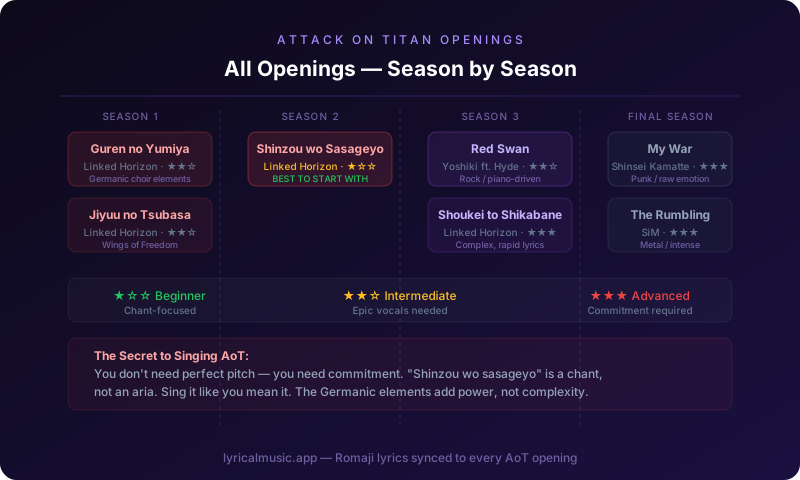
All Attack on Titan Openings Ranked by Difficulty
Beginner — anthemic and chant-based:
"Shinzou wo Sasageyo" by Linked Horizon (Season 2) — The standard. The chant is simple and powerful. The verses are moderate difficulty. Start here.
Hear this live in Lyrical: *"shinzou wo sasageyo"*
"Guren no Yumiya" by Linked Horizon (Season 1, first cour) — The original. Germanic choir elements, driving rhythm, iconic hooks.
Intermediate — more complex:
"Jiyuu no Tsubasa" by Linked Horizon (Season 1, second cour) — "Wings of Freedom." More melodic than "Guren no Yumiya" but still powerful.
"Red Swan" by Yoshiki feat. Hyde (Season 3, first cour) — Different style — more rock, less epic orchestral. Yoshiki's piano-driven sound.
"Shoukei to Shikabane no Michi" by Linked Horizon (Season 3, second cour) — "Path of the Corpse and the Figure." Complex structure, rapid lyrics.
Advanced — technically demanding:
"My War" by Shinsei Kamattechan (Final Season, first cour) — Unconventional, punk-influenced, emotionally raw. Requires versatility.
"The Rumbling" by SiM (Final Season, second cour) — Heavy metal, screaming, intense energy. Vocally demanding.
"Under the Tree" by SiM (Final Season, third cour) — Melodic but emotionally heavy. The finale's emotional weight.
How to Approach Linked Horizon's Style
Linked Horizon, led by Revo, created the iconic sound of Attack on Titan's early seasons. Understanding their style helps you sing their songs.
Epic scale: Orchestra, choir, rock band — all layered together. The sound is massive.
Choral elements: Multiple voices singing together. You are part of a crowd, not a soloist.
Germanic influences: German words and sounds mixed with Japanese. Adds historical weight.
Building intensity: Songs start strong and get stronger. No relief, just escalation.
Call and response: The "sasageyo" chant is designed for crowd participation.
How to practice:
Start with the chants. "Shinzou wo sasageyo" and "Guren no Yumiya's" choir sections are the easy wins. Learn these first.
Then work on the verses. They are faster and more melodic than the chants. Practice breath control — the phrases are long.
Finally, put it together. The contrast between verse and chant is the song's power.
The Meaning Behind the Lyrics
Understanding the lyrics adds depth to your singing:
"Guren no Yumiya" — "Crimson Bow and Arrow." References the Scouts' weapons and their determination to fight. The bow represents humanity's last stand.
"Shinzou wo Sasageyo" — "Dedicate Your Hearts." The Scout Regiment's salute and motto. The song is about sacrifice for the greater good.
"Jiyuu no Tsubasa" — "Wings of Freedom." References the omni-directional mobility gear. Freedom through fighting.
"My War" — The Final Season's shift in perspective. Raw, punk energy reflecting the story's darker turn.
"The Rumbling" — The cataclysmic event that reshapes the world. Heavy metal fury matching the story's intensity.
Singing these songs connects you to the narrative's emotional weight. You are expressing the desperation, determination, and tragedy that make Attack on Titan unforgettable.
Using Lyrical to Sing Attack on Titan Songs
Lyrical makes learning Attack on Titan openings possible. The fast lyrics, German words, and epic scale are hard to follow with static text.
Real-time sync: Lyrics highlight as they are sung. You never lose your place in "Shinzou wo Sasageyo's" rapid verses.
Romaji built-in: Japanese lyrics with phonetic spelling underneath. German words are spelled phonetically too.
Word-by-word karaoke: Each word lights up individually. You know exactly when to drop into that "sasageyo" chant.
Dynamic Island: Lyrics float on your screen while you rewatch episodes. Check AoT theories without pausing.
CarPlay: Lyrics on your car's display. Road trip sing-alongs with fellow Scouts.
Haptic feedback: Your phone pulses with the beat. You feel the Titan-shaking intensity in your hand.
The specific thing Lyrical does that nothing else does: it captures the epic scale of Attack on Titan music. You are not just reading lyrics. You are preparing for battle.
Common Questions About Singing Attack on Titan Openings
Do I need to learn Japanese to sing these openings?
No. Romaji lets you pronounce Japanese words using English letters. The German words are spelled phonetically. "Shinzou wo sasageyo" is accessible even for beginners.
What is the easiest Attack on Titan opening to learn?
"Shinzou wo Sasageyo" is the perfect starter. The chant is simple and powerful. The verses are moderate difficulty. The emotional impact carries you through.
How do I sing the German words?
Pronounce them as written in romaji. "Jäger" becomes "yeh-ger." "Sieg" becomes "zeeg." The songs blend German and Japanese seamlessly.
Why are these openings so epic?
Linked Horizon specifically crafted an orchestral rock sound to match the story's scale. The music needed to feel as big as the Titans. They succeeded.
Can I learn Japanese through these songs?
You will pick up words and phrases. "Shinzou" (heart), "sasageyo" (dedicate), "jiyuu" (freedom). But anime Japanese is dramatic, not conversational. Use songs as a supplement.
What if my favorite opening is not in the app?
Attack on Titan is one of the biggest anime franchises. All openings appear in lyrics databases quickly. Linked Horizon's songs are especially well-documented.
How long does it take to learn "Shinzou wo Sasageyo"?
The chant takes days. The full TV-size opening takes one to two weeks. The full song takes longer. Be patient — the satisfaction of screaming "sasageyo" with perfect timing is worth it.
Should I learn the full song or just the TV size?
Start with TV size (90 seconds). That is what plays before episodes. Once you have that down, learn the full version if you want. Most fans only need the TV size.
The Bottom Line
You can sing Attack on Titan openings without knowing Japanese. Romaji makes them accessible. "Shinzou wo Sasageyo" is the perfect starting point — epic, chant-based, emotionally powerful. Work up to harder songs like "The Rumbling." Use an app that shows synced lyrics.
The feeling of screaming "sasageyo" with the opening sequence playing, your voice joining the virtual choir, understanding why this opening became legendary? That is the Attack on Titan fan experience. Lyrical gets you there.
Try Lyrical Free
Lyrical shows real-time synced lyrics with romaji for Attack on Titan openings and thousands of other anime songs. Dynamic Island, CarPlay, and word-by-word karaoke mode included.
Download Lyrical Follow every Attack on Titan song in real-time lyrics.
*Last updated: March 2026*